
Hong Kong Trademark Registration — Brands Are First-Come, First-Served; the Earlier You Apply, the Sooner You're Protected

To register a trademark in Hong Kong, you must file a Form T2 with the Trade Marks Registry of the Intellectual Property Department. Alpha’s fee is HK$4,800 for the first class and HK$2,200 for each additional class. The process includes examination and a 3-month publication period, with smooth cases typically completed in 6 to 9 months. Registration is valid for 10 years (from the filing date) and can be renewed indefinitely upon expiry.
香港商標註冊代辦服務・免費查冊

Why Register a Trademark?

Registering your company name with the Companies Registry does not mean you own the trademark rights. If you don’t register your trademark, others can register your brand name or logo first, potentially blocking you from using it or even demanding compensation. After registering a trademark, you gain exclusive rights in the relevant class, allowing you to stop copying, licence it to others, and treat your brand as a transferable asset.
TM
Marking a trademark as pending or unregistered only indicates you claim the mark as yours — it does not confer registered exclusive rights.
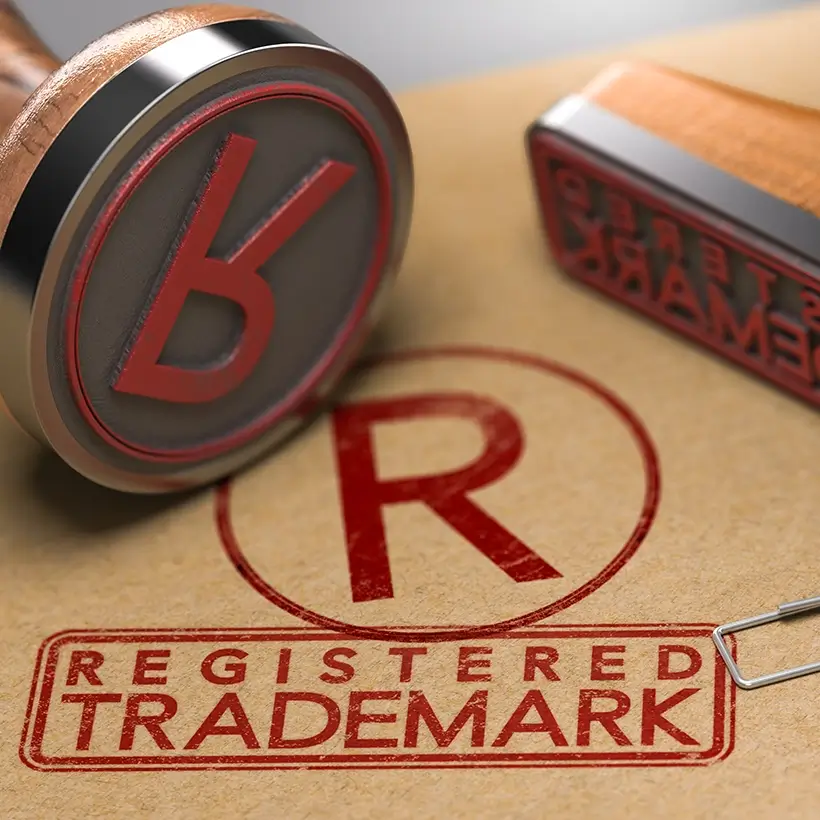
®
Only after successful registration can you use it, representing that you have obtained statutory exclusive rights in the specified class and can pursue infringement claims under the law.

Trademark Protection Has Three Boundaries — All Equally Important

Territorial Boundary

Trademarks are registered independently in each jurisdiction. A Hong Kong trademark protects only Hong Kong and does not automatically extend to Mainland China, Taiwan, or overseas markets; the Madrid Protocol international registration system is not yet applicable to Hong Kong. If your products will be sold in Mainland China or through cross-border e-commerce platforms, you should apply locally at the same time to avoid your brand being registered first by someone else there.

Class Boundary

Trademarks are registered under the 45 Nice Classification classes, and protection applies only to registered classes. For the same name, registering Class 25 (clothing) does not prevent someone else from using it in Class 43 (catering services). Before applying, review your existing business and expansion plans for the next two to three years to secure your core classes in one go.

Language Boundary

Chinese and English trademarks are two separate registrations. When an English brand enters the Mainland market, a Chinese translation is often given by the company or chosen by consumers themselves; if it isn’t registered as well, the Chinese name can be registered by a third party at any time, causing your brand-building efforts to be lost. Alpha will advise on whether simultaneous Chinese and English filing is needed based on your market plans.

Which Classes Should Common Industries Register?

  • Food & Beverage: Class 29 (meat, dairy products, processed food), Class 30 (cereal products, seasonings, beverage ingredients), Class 43 (restaurant and catering services)

  • Beauty & Personal Care: Class 3 (cosmetics, skincare products), Class 44 (beauty and care services), Class 35 (retail and online store services)

  • Jewellery & Accessories: Class 14 (precious metals, jewellery, watches), Class 35 (retail), Class 42 (design services)

  • Technology & Software: Class 9 (apps, electronic products), Class 42 (software development, SaaS, IT consulting)

  • Apparel & Fashion: Class 25 (clothing, footwear, headwear), Class 18 (bags, leather goods), Class 35 (retail)

  • Education & Training: Class 41 (education, training, event organisation), Class 16 (printed teaching materials)

  • Trading & E-commerce: Class 35 (retail, wholesale, advertising) plus the classes covering the goods sold

Not Sure How Many Classes to Register?

Send your trademark artwork and business summary via WhatsApp, and after Alpha’s free search, we’ll explain which classes are worth registering now and which can be added later — we won’t recommend registering excessive classes just to increase fees.

Trademark Registration Fees

Alpha's Service Fee (Government Fees Included)

Trademark registration application
First class HK$4,800, each additional class $2,200
Pre-filing search opinion
$500 (deductible as a deposit from the registration fee if you proceed with our filing service)
Renewal after 10 years
$3,800 for the first class, $1,800 for each additional class
Late renewal (within 6 months)
Additional $800 per class

Alpha's Service

Free Search

Assess the risk of identical or similar trademarks before deciding whether to file.

Service Fee

Quoted by number of classes and case complexity — send your trademark artwork via WhatsApp for a same-day reply.

What's Included

Class recommendations (45 Nice Classification classes), document preparation and filing, progress follow-up, and expiry reminders.

Trademark Registration Procedure

01
Free Search

Provide the trademark you wish to apply for so we can assess conflicts with existing trademarks and reduce the risk of rejection.

02
Select Classes
Select the goods/services classes from the 45 Nice Classification classes based on your actual business — precision over quantity.
03
File the Application
Once steps 1 and 2 are confirmed, the application is filed with the Intellectual Property Department.
04
Examination
The Registry examines whether the mark is distinctive, whether it violates the Ordinance, or conflicts with a prior trademark — we respond on your behalf to any objections raised.
05
Gazette Publication
Once examination is passed, the mark is published in the Gazette for 3 months, during which the public may raise objections.
06
Registration and Certificate Issuance
If no objection is raised, a certificate of registration is issued, with the protection period running for 10 years from the filing date.

Three Things to Note Before Filing

Protection Starts From the Filing Date

Once registered, the 10-year protection period is backdated to the filing date — so the earlier you apply, the better.

Hong Kong Registration Protects Only Hong Kong

A Hong Kong trademark does not automatically extend to Mainland China or overseas; the Madrid Protocol international registration system is not yet applicable to Hong Kong, so separate applications are needed for Mainland China and other regions — Alpha can handle simultaneous Hong Kong and Mainland registration on your behalf.

Which Trademarks Get Rejected?

Purely descriptive terms (such as “fresh fruit”), generic names, marks similar to prior trademarks, or misleading elements may all be rejected. A pre-filing search and professional opinion can significantly reduce this risk.

Register Your Trademark When You Incorporate — Brands Are First-Come, First-Served

Many clients only discover their brand name has been registered by someone else after incorporating. Handling company registration, company secretary, and trademark application together at the outset of your business offers the lowest cost and lowest risk, all followed up by the same Alpha team.

安達商業服務為香港中小企老闆解答開公司及報稅常見問題

Trademark Registration FAQ

How much does it cost to register a trademark in Hong Kong?

Alpha’s fee is HK$4,800 for the first class and HK$2,000 for each additional class. To protect your company’s rights, trademark applications typically cover 2-3 industry classes — a few thousand dollars secures your trademark for 10 years.

Smooth cases (no objections, no opposition) typically take 6 to 9 months. During this period you may use the “TM” symbol; only after successful registration can you use the “®” symbol.
10 years, from the filing date, renewable indefinitely upon expiry, each renewal for another 10 years. Alpha will remind you in advance.
Yes. Company name registration only prevents another company from registering the identical name — it does not grant exclusive brand rights. To stop others from using your brand to sell goods, you must register a trademark.
No. Trademarks are registered under the 45 Nice Classification classes and are protected only within registered classes. We will recommend the most cost-effective combination based on your current business and expansion plans.
You can raise an objection during the publication period, or apply for invalidation after registration, though this involves significant evidence and cost. The safest approach is to apply as early as possible when starting your business — it’s first-come, first-served.